
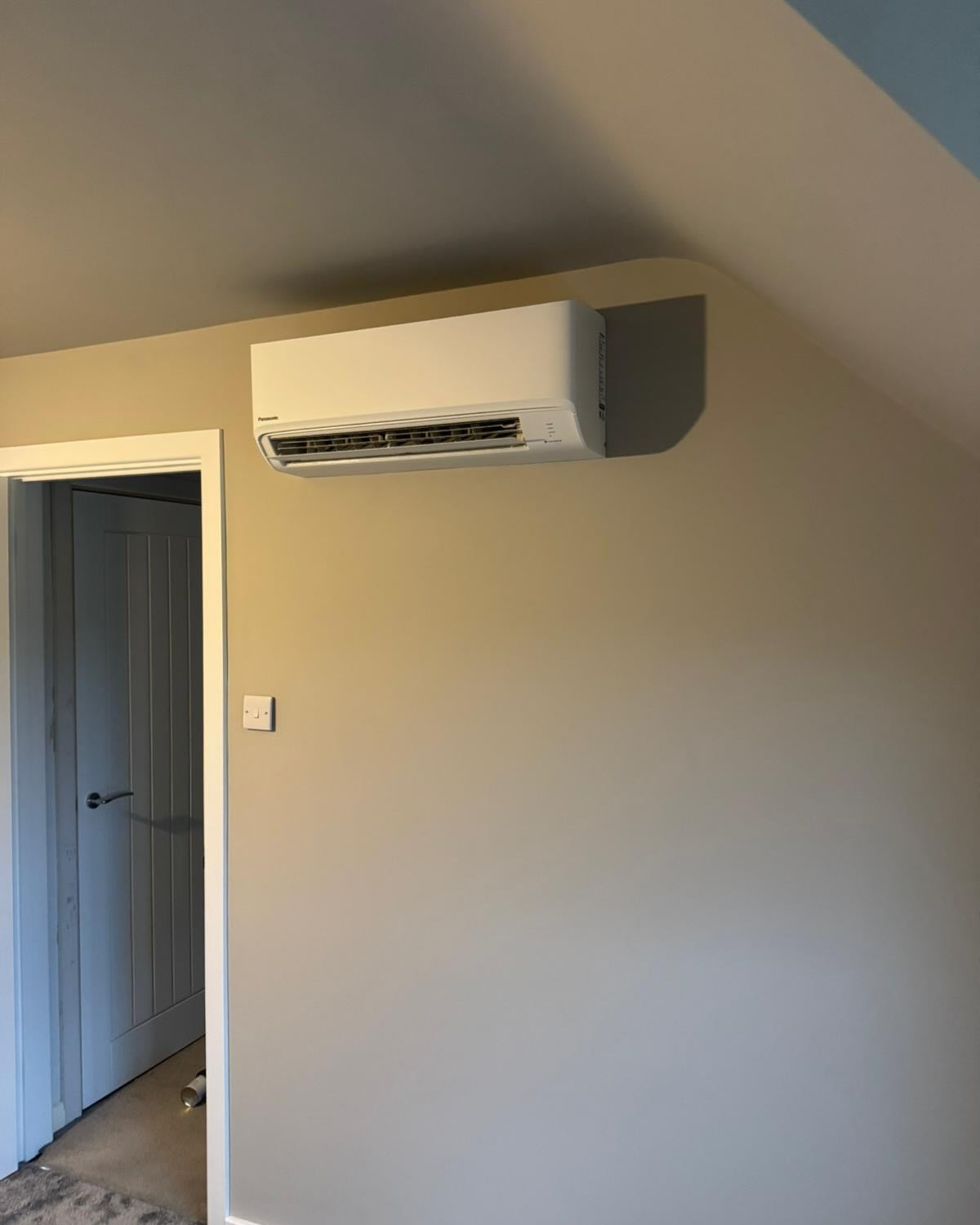
Does air conditioning heat your home in winter?
Yes. Almost every air conditioning unit we install is a reverse-cycle heat pump, which means it heats as well as cools. It works down to well below freezing, and because it moves heat rather than making it, it typically delivers around three to four units of heat for every unit of electricity it uses. One system, both jobs, all year.
Most people still think of air conditioning as a summer purchase. That was true twenty years ago. It is not true now, and the confusion costs homeowners money — they fit cooling in July and a separate heater in November, when one machine would have done both.
How it actually works
An air conditioner does not make cold. It moves heat from one place to another — out of your room and into the air outside. A reverse-cycle unit can run that same process backwards. In winter it takes heat out of the outside air, even when that air feels cold to you, and releases it into the room.
Air at 2°C still contains a large amount of heat energy; "cold" is only cold relative to us. The refrigerant inside the system boils at a far lower temperature than that, so it can absorb heat from air we would call freezing, and a compressor then raises that heat to a temperature useful indoors. It is the same physics as the fridge in your kitchen, pointed the other way.
A convector heater converts electricity into heat at roughly one to one. A reverse-cycle unit does not convert anything — it moves heat that already exists, and the electricity only runs the pump. That is why the numbers below look the way they do.
Will it work on a genuinely cold day?
Yes. Efficiency falls as the outside temperature drops, because there is less heat in the air to gather, but the system keeps running — it does not cut out. Units fitted for UK homes are specified to keep heating well below the temperatures this country actually reaches.
Two honest caveats. In very cold weather the outdoor unit will occasionally pause for a few minutes to defrost itself, which is normal and automatic. And a system sized for cooling a room in August is not necessarily sized to heat that same room in January — which is why the heating load matters at survey stage, not as an afterthought.
What it costs to run
The number that matters is on the unit's energy label: the seasonal coefficient of performance, or SCOP. It tells you how many units of heat the system delivers across a whole heating season for each unit of electricity it draws. A modern domestic unit sits comfortably above 4 in most cases, and we will show you the figure for the exact model quoted rather than a brochure average.
| How you heat the room | What it does with the energy | Roughly what you get back |
|---|---|---|
| Reverse-cycle air conditioning | Moves heat that already exists in the outside air | Around 3 to 4 units of heat per unit of electricity, and often more in mild weather. |
| Electric panel or convector heater | Turns electricity straight into heat | One unit of heat per unit of electricity. No multiplier. |
| Gas central heating | Burns gas to heat water for radiators | A good modern boiler is efficient, but gas heats the whole circuit, not one room. |
Against electric heaters the comparison is not close — a reverse-cycle unit costs roughly a third to a quarter as much to run for the same warmth.
Against gas it is a genuine question rather than a slam dunk, and anyone who tells you otherwise is selling. Electricity costs more per unit than gas in the UK. The multiplier above is what closes that gap, and whether it closes it entirely depends on the current price of each and on what you are actually heating. Where reverse-cycle usually wins outright is heating one room properly — a home office, a converted loft, a bedroom, an extension — rather than firing a whole boiler and warming eight radiators to keep one room comfortable.
Where this makes sense, and where it does not
It makes obvious sense if you are extending or renovating and would otherwise buy cooling and heating separately; if you have no mains gas; if you have one or two rooms that the central heating never quite reaches; or if you have a garden office, loft conversion or south-facing room that is too hot in summer and too cold in winter. It also makes sense commercially, where a building already needs cooling and would otherwise run electric heaters through the winter.
It is not usually a straight replacement for a whole-house wet central heating system. That is a different product — an air-to-water heat pump feeding your existing radiators — and a different conversation. If that is what you are after, say so and we will tell you honestly whether it suits your property.
What about the government grant?
There is a £2,500 grant for air-to-air heat pumps, which is the technology behind reversible air conditioning, and it is not yet claimable. The market is already advertising it as though it were available, so it is worth checking the current position before you plan around it.
Common questions
Not sure whether this suits your property?
Book a survey and we will tell you what it would actually do in your rooms, in writing. Call 03453 022 969.
Reviewed by Harry Lee, Director, HT Cooling Ltd (F-Gas registered company, certificate 2004080). Published 22 September 2026.