
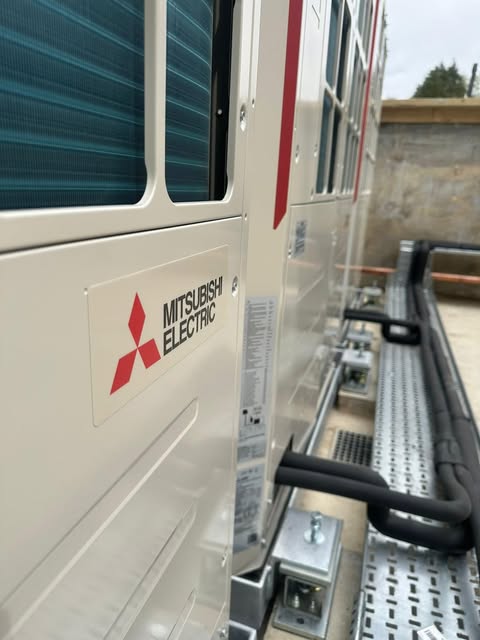
VRF Air Conditioning Systems
VRF is what you use when a building has many spaces that all want something different at the same time. It is not simply a bigger version of a domestic system, and it is specified for a reason.
What it actually does differently
An ordinary split system serves one space and runs at one output. A VRF system runs one outdoor unit against many indoor units and varies how much refrigerant goes to each one, so every room gets what it needs rather than what the building average needs.
The version worth understanding is heat recovery. In a building where one side needs cooling and the other needs heating at the same time — a common situation in autumn and spring — a heat recovery system moves the heat it removes from one area into the area that wants it, instead of throwing it away outside. On the right building that is a substantial saving, because the energy is being used twice.
When VRF is the right answer
- Multiple rooms or tenancies with genuinely different demands
- Buildings where roof or plant space for several outdoor units does not exist
- Refurbishments where running one set of pipework is easier than several
- Buildings that will change use or subdivide, where flexibility is worth paying for
When it is not
VRF is more expensive to install and more complex to maintain than simpler equipment. For a single open-plan office of modest size, or a shop with one space, a well-designed split or multi-split system will do the job for less money and be cheaper to look after. We will tell you when that is the case. Specifying VRF where it is not needed is a good way to spend a client's money without improving the building.
Why the design work matters more than the badge
VRF is unforgiving of poor design. Pipe runs have length and height limits, refrigerant volume has to be calculated against the size of the rooms it serves for safety, and the controls strategy decides whether the system delivers the efficiency it promises on paper. Most disappointing VRF systems are not bad equipment — they are good equipment poorly designed or commissioned.
Commissioning is where that is proved or lost. We record what the system is actually doing at handover rather than assuming it matches the design.
Maintenance and the obligations that come with it
A VRF system holds a significant refrigerant charge, which usually places it firmly inside the refrigerant leak-checking rules, and a building with one is almost certainly over the 12kW threshold for five-yearly air conditioning inspections. Both duties sit with the building operator. We will set out which apply to your system at handover.