
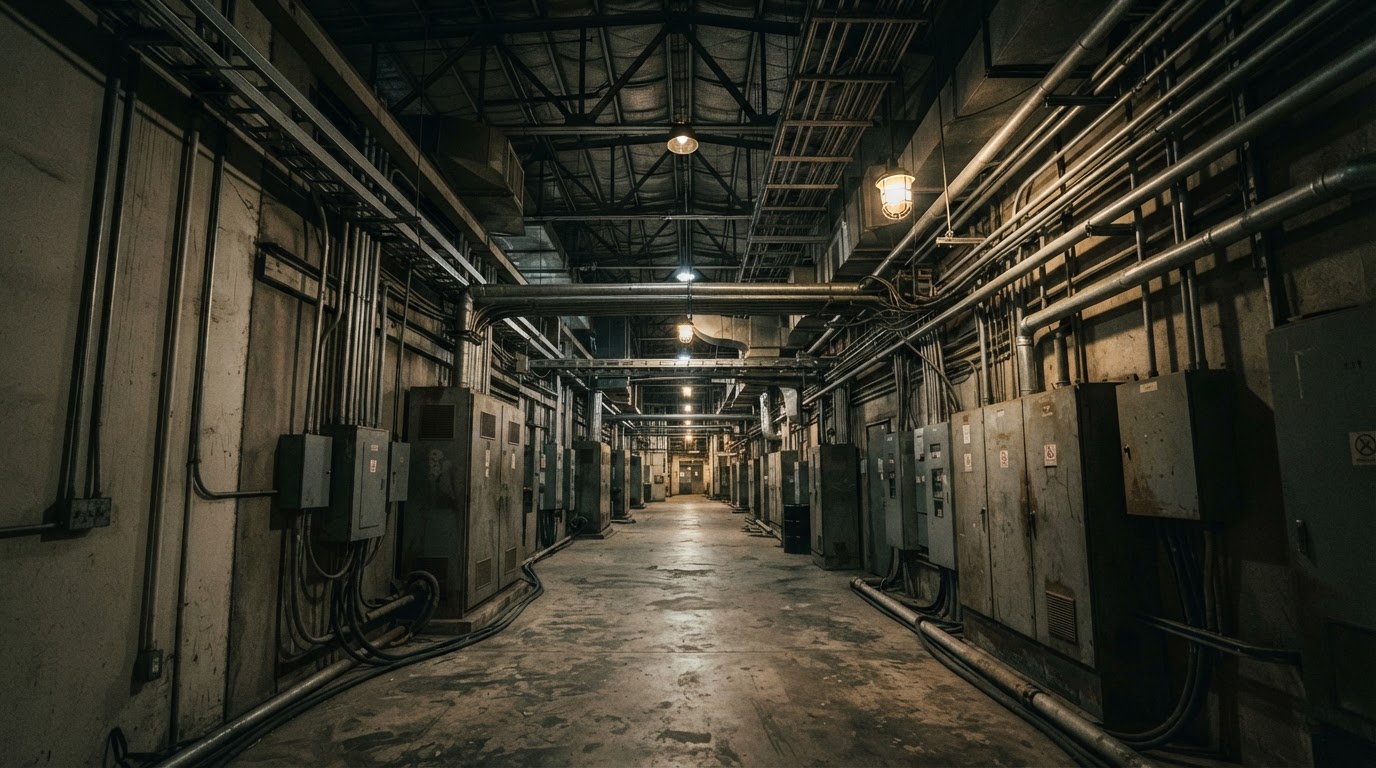
Industrial Electrical Services
Industrial installations fail differently from commercial ones. The environment is harsher, the loads are heavier, and the cost of unplanned downtime is measured in lost production rather than inconvenience. HT Cooling works on industrial sites across Surrey, Berkshire and London.
What makes an industrial installation different
Three-phase and motor loads
Machinery, compressors, pumps and fans behave differently from lighting and sockets. Starting currents, motor protection and how a motor fails are the things that matter, and getting protection wrong either nuisance-trips production or fails to protect the machine.
The environment attacks the installation
Dust, moisture, vibration, heat, chemicals and physical damage from vehicles and materials all shorten the life of an installation. Equipment that would last decades in an office does not last decades in a workshop, and inspection intervals should reflect that rather than being copied from an office schedule.
Downtime is the real cost
A repair that takes two hours can cost a day of production if it happens at the wrong moment. That changes the economics of maintenance: it is nearly always cheaper to find a developing fault during a planned shutdown than to discover it during a shift.
Planned shutdowns
Most substantial industrial electrical work happens during a shutdown, and the value is in the planning: knowing exactly what will be done, in what order, what spares are on site before it starts, and what the fallback is if something is found. We plan the work against your shutdown window rather than asking you to work around ours.
Finding problems before they stop the line
Heat is the early warning. A connection that is loosening, a cable that is overloaded or a component beginning to fail almost always runs hot before it fails, often for weeks. Inspection that looks for that during operation catches faults while they are still a scheduled repair rather than a breakdown.
The same applies to the records. A site that knows which circuit feeds which machine, and what condition each board is in, fixes faults in a fraction of the time of a site that does not. On older sites, establishing that is often the most valuable first job.
Power, capacity and adding plant
Industrial sites add equipment over years, and the installation grows with them, usually without anyone stepping back to look at the whole. Before new plant goes in it is worth knowing what the supply and distribution can actually take, where the spare capacity is, and whether load can be redistributed rather than the supply upgraded.