
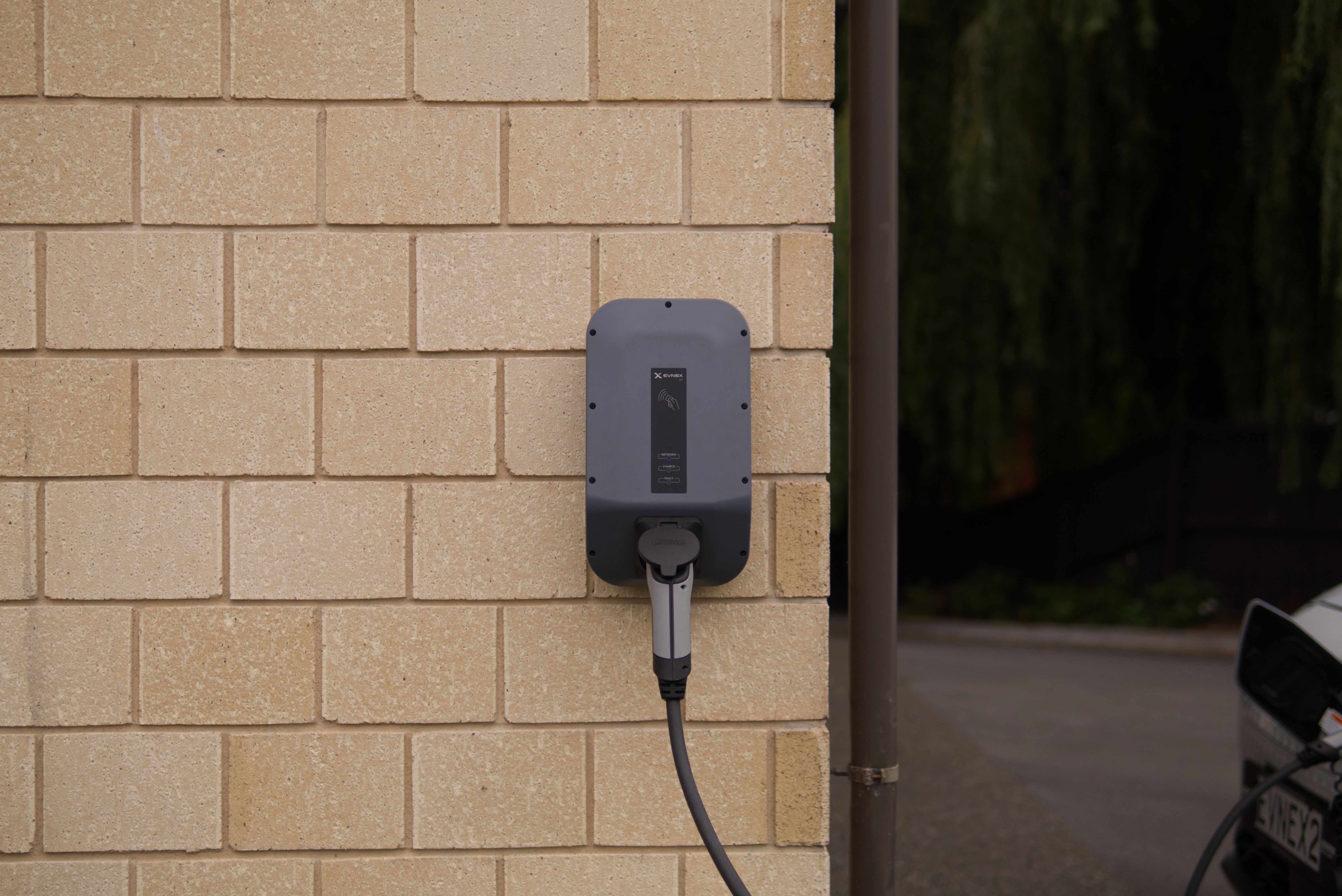
EV Charger Installation
Fitting a vehicle charger is mostly an electrical question, and the answer is decided by the supply into the building rather than the charger on the wall. HT Cooling installs chargers for homes and businesses across Surrey, Berkshire and London.
The question that decides everything: what can your supply take?
A charger is a large, sustained load. A home already running a shower, an oven and perhaps a heat pump may not have comfortable headroom left, and a business adding several charge points almost certainly needs to know its spare capacity before ordering anything.
There are three possible answers, and only one of them is expensive:
- There is enough spare capacity, and the charger simply goes in.
- There is not quite enough, and load management is the answer — the charger monitors the building's demand and turns itself down when everything else is running, rather than tripping the main fuse.
- There is genuinely not enough, and the supply needs upgrading, which involves the network operator and takes time.
Establishing which of the three applies is the first thing we do, because it is the difference between a straightforward job and a project.
Where the charger goes, and why it is not just about the parking space
The cable route from the board to the charger is usually what makes a job simple or difficult: distance, whether it can be run inside, whether a drive or path has to be crossed, and how it will be protected. Position also has to consider where the car's socket is, whether the cable will trail across a footpath, and weather exposure.
For businesses, add the questions of who is allowed to use it, whether use needs recording or charging for, and what happens when more people want to charge than there are points.
Single charge point or a site that will grow
The most common regret we see in commercial work is a first charge point installed with no thought for the second and third. Putting in the containment and capacity for more at the outset costs a fraction of coming back and starting again, even if only one unit is fitted now.
If the plan is more chargers later, say so at survey. It changes what we install, usually for very little extra.
Doing it alongside other work
Where a building is already having electrical work, air conditioning or a heat pump installed, adding charge points at the same time avoids paying twice for access, containment and the same electrical assessment.