
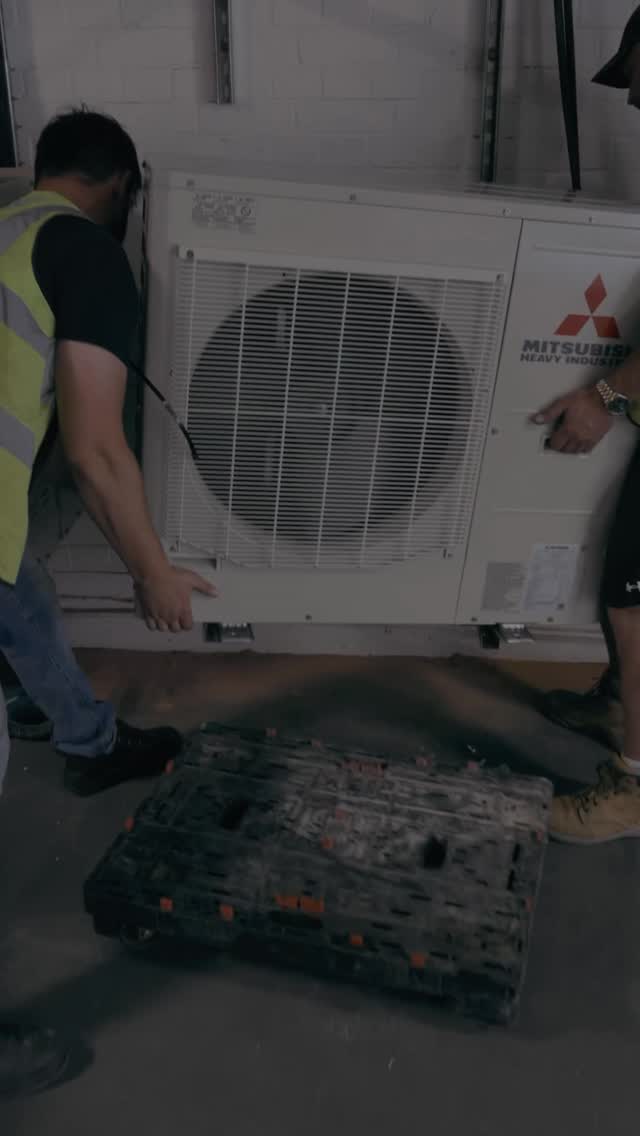
Air Conditioning Servicing & Maintenance
Regular servicing keeps air conditioning running efficiently, protects the warranty and prevents expensive breakdowns. HT Cooling services domestic, commercial and industrial systems across Surrey, Berkshire and London, on one-off visits and on planned maintenance contracts. Our engineers are F-Gas registered and the company holds F-Gas certificate 2004080.
When a leak check is the law, not a choice
If you run a building with air conditioning in it, the legal duty to have the system checked for refrigerant leaks sits with you as the user of the equipment — not with the contractor who installed it. Most building managers we meet assume it works the other way round.
How often the check is required depends on how much refrigerant the system holds, measured as the amount of carbon dioxide it is equivalent to:
- 5 tonnes or more, and under 50 tonnes: at least once every 12 months
- 50 tonnes or more, and under 500 tonnes: at least once every 6 months
- 500 tonnes or more: at least once every 3 months
In practical terms, a system holding around 2.4 kg of R410A — a common refrigerant in offices and shops — reaches the first threshold. A single small split unit in a home usually sits below it.
Two things change that timetable. If automatic leak detection is fitted, the gap between checks can be doubled. And small hermetically sealed systems are outside the requirement altogether unless they hold enough refrigerant to reach 10 tonnes of carbon dioxide equivalent.
The rules are set out on the government's guidance page, Checking F gas equipment for leaks.
If you are not sure which bracket your system falls into, tell us the model and we will work it out before quoting.
What a service actually includes
A measured performance check, not a look over
We record the temperatures across the indoor and outdoor coils, the operating pressures and the running current, and compare them with what the unit should be doing. Numbers show a system drifting long before anyone in the building feels it.
Filters, coils and drains cleaned
A blocked filter makes the unit work harder for less cooling, and that shows up on the electricity bill before it shows up as a fault. Condenser coils clogged with dust or leaf litter do the same. Drain pans and pumps are cleared, because a blocked drain is the most common cause of water appearing on a ceiling.
Refrigerant and leak check
Pressures and charge are checked, joints and pipework are inspected, and where the system falls under the leak-checking rules above, the check is carried out and recorded properly.
Electrics and controls
Connections are checked for heat damage and tightness, contactors and capacitors are inspected, and the controls and thermostats are tested so the system does what the occupier asks it to.
A written report
You get a record of what was found, what was done, and anything we think will need attention before the next visit — so you are not being asked to take a verbal "all fine" on trust.
How often should air conditioning be serviced?
Three separate things drive the answer, and they are often confused:
- The law sets a minimum for leak checking only, based on the refrigerant volume above. It says nothing about cleaning or performance.
- The manufacturer sets a servicing requirement to keep the warranty valid. Most require documented servicing at set intervals, and the interval varies by manufacturer and by unit — we confirm what applies to the equipment on your site before the first visit.
- Use decides the rest. A server room or a busy restaurant kitchen works its equipment far harder than an office that runs nine to five, and needs seeing more often.
For most commercial installations a planned visit at least once a year is the sensible floor, with heavier or business-critical systems seen more often.
What changes the price
We survey before quoting, because the same building can be a very different job depending on what is in it. What moves the price: how many indoor units there are, how easy they are to reach, whether working at height or out of hours is needed, whether filters or parts need replacing, and whether the work is a one-off visit or part of a maintenance contract. Contracts cost less per visit because the visits are planned into the route.
Planned maintenance contracts
For sites with more than a handful of units, a contract is usually the cheaper and calmer route. Visits are scheduled so nobody has to remember them, leak checks are timed to fall due correctly, and the records are kept in one place for you. Tell us what is on site and we will set out what a year of cover looks like.